
First Year Engineering – Overview
The First Year Engineering program in our Autonomous Institution is designed to provide a strong academic foundation and smooth transition into professional engineering education. The curriculum aims to develop scientific thinking, logical reasoning, and problem-solving skills among students. With the advantage of academic autonomy, the institute offers a flexible and choice-based curriculum drawn from Basic Sciences and Engineering Sciences.
The program introduces students to core engineering concepts, modern technologies, and industry-oriented practices in a stress-free and learner-centric environment. At the same time, it helps students build the basic skills required to understand and adapt to their chosen branches of engineering.
First Year Engineering – HoD Message
Welcome to the First Year Engineering Department.
As an Autonomous Institution affiliated to the University, we are empowered to design and implement an innovative, flexible, and industry-relevant curriculum aligned with the National Education Policy (NEP) 2020. The First Year Engineering program is structured to strengthen students’ fundamentals while encouraging creativity, analytical thinking, and lifelong learning.
Our curriculum emphasizes choice-based learning, hands-on experience, vocational skill development, and interdisciplinary exposure. In addition to technical knowledge, we focus on professional communication, ethics, environmental awareness, and Indian cultural values to ensure the holistic development of our students.
Our dedicated faculty members are committed to mentoring students and supporting them in their academic journey. We strive to create a learner-friendly environment that prepares students to meet future technological challenges with confidence and competence.
We wish all our students a rewarding and successful learning experience.
Scope of First Year Engineering
The First Year Engineering program enables students to:
- Build a strong foundation in Applied Mathematics and Basic Sciences and Technology.
- Gain fundamental knowledge of Electrical, Electronics, and Digital Systems
- Develop programming skills through C Programming and Python Programming
- Understand modern engineering practices and emerging technologies
- Enhance communication skills, ethics, and professional conduct
- Acquire vocational and industry-relevant skills through NEP 2020–based course structures
- Develop awareness of environmental sustainability
- Learn value added courses such as Universal Human Values and Indian Knowledge Systems
- Achieve holistic growth through liberal learning and co-curricular courses
This broad-based foundation prepares students for advanced engineering studies, research, innovation, and industry careers.
Vision of the College
To serve and have a transformative impact on society by constantly pursuing excellence in technical education, innovation and entrepreneurship for human development with strong ethical values.
Mission of the College
- Serve and help transform society by graduating talented, broadly educated engineers, equipped with state of art technology resources for developing sustainable solutions.
- Academic excellence in Science, Engineering and Technology through dedication to duty, commitment to research, innovation in learning and faith in human values.
- Cultivate the spirit of entrepreneurship and the connection between academia and industry that fosters problem solving through collaboration
- Enable the students to develop into outstanding professionals with high ethical standards capable of creating, developing and managing global engineering enterprises.
Vision of the Department
To provide comprehensive requisite knowledge of applied sciences and basic engineering subjects to engineering students to strengthen their Mathematics, English basics and Soft skills
Mission of the Department
- To impart quality education in science, Mathematics, Mechanics, Drawing and Electrical engineering subjects
- To groom the students with flair towards hand on experience to solve real life problems.
- To acquaint the students with effective communication skills and provide them ample practice for improving their interpersonal skills.
- To inculcate discipline and moral values amongst the students.
Program Outcomes (PO)
| Engineering Graduates will be able to: | |
| PO1 | Engineering knowledge: Apply the knowledge of mathematics, science, engineering fundamentals, and an engineering specialization to the solution of complex engineering problems. |
| PO2 | Problem analysis: Identify, formulate, review research literature, and analyze complex engineering problems reaching substantiated conclusions using first principles of mathematics, natural sciences, and engineering sciences. |
| PO3 | Design/development of solutions: Design solutions for complex engineering problems and design system components or processes that meet the specified needs with appropriate consideration for the public health and safety, and the cultural, societal, and environmental considerations. |
| PO4 | Conduct investigations of complex problems: Use research-based knowledge and research methods including design of experiments, analysis and interpretation of data, and synthesis of the information to provide valid conclusions. |
| PO5 | Engineering Tool Usage: Create, select, and apply appropriate techniques, resources, and modern engineering and IT tools including prediction and modeling to complex engineering activities with an understanding of the limitations. |
| PO6 | The Engineer and The World: Apply reasoning informed by the contextual knowledge to assess societal, health, safety, legal and cultural issues and the consequent responsibilities relevant to the professional engineering practice. |
| PO7 | The Engineer and The World: Understand the impact of the professional engineering solutions in societal and environmental contexts, and demonstrate the knowledge of, and need for sustainable development. |
| PO8 | Ethics: Apply ethical principles and commit to professional ethics and responsibilities and norms of the engineering practice. |
| PO9 | Communication: Communicate effectively on complex engineering activities with the engineering community and with society at large, such as, being able to comprehend and write effective reports and design documentation, make effective presentations, and give and receive clear instructions. |
| PO10 | Project management and finance: Demonstrate knowledge and understanding of the engineering and management principles and apply these to one’s own work, as a member and leader in a team, to manage projects and in multidisciplinary environments. |
| PO11 | Life-long learning: Recognize the need for and have the preparation and ability to engage in independent and life-long learning in the broadest context of technological change. |
Program Specific Outcome (PSO)
NOT APPLICABLE FOR FIRST YEAR
Teaching Faculty
...
Ph.D
M.E. (MECHANICAL ENGG. MACHINE DESIGN, MUMBAI UNIVERSITY)
B.Tech (MECHANICAL ENGG. INSTITUTION OF ENGINEERS INDIA)
Ph.D. in Mathematics, PGD in Petroleum Technology, Masters of Science (Mathematics), Masters of Science (Geology), Bachelor of Science
Non-Teaching Staff
Physics Lab Assistant
Computer Lab Assistant
Board of Studies
| S.N. | Name Of Faculty | Post |
| S.N. | Name Of Faculty | Designation in the Committee |
| 1 | Dr.Sandhya Mathur | HOD (Chairperson) |
| 2 | Dr.B.B.Mulla | Member |
| 3 | Prof.K.B.Patil | Member |
| 4 | Prof.Dipika Wagh | Member |
| 5 | Dr.Archana Borkar | Member |
| 6 | Prof.Dinesh Gangurde | Member |
| 7 | Prof.Smita Kurade | Member |
| 8 | Dr.Preeti Kaushal | Member |
Roles and Responsibilities
- Design and update curriculum and syllabus for first-year programs.
- Ensure courses are foundational, industry-relevant, and outcome-oriented.
- Recommend teaching, learning, and evaluation methods.
- Approve course credits, assessment schemes, and learning outcomes.
Composition:
- Chairperson: Dr.Sandhya Mathur
- Internal Faculty Members: All Faculty members of FE
External Experts: Dr.Anuradha Pawar,Dr.Atul Dubewar,Dr.Swati Panvalkar,Dr.sima Singh,Dr.D.R.Kalbande
Roles and Responsibilities:
The PAQIC Committee looks after the smooth running of First Year Engineering. It plans academic activities, prepares schedules, and ensures that classes are conducted properly.
The committee checks that the syllabus is completed on time, reviews student performance, and collects feedback to improve teaching and learning. It also makes sure the department follows the rules and guidelines of bodies like the All India Council for Technical Education and University Grants Commission.
Overall, PAQIC works to maintain good academic standards and create a positive learning environment for first-year students.
Composition:
The PAQIC Committee of First Year Engineering is constituted to ensure effective planning, academic quality, and compliance. The committee consists of:
| S.N. | Name Of Faculty | Post |
| 1 | Dr.Sandhya Mathur | HOD (ChairPerson) |
| 2 | Prof.Jayashri Mahale | Dept.PAQIC Coordinator |
| 3 | Prof.Aditya Kakad | Academic Coordinator |
| Prof.Smita Kurade | ||
| 4 | Prof.D.D.Gote | Dept. Examination Coordinator |
| Prof.Smita Kurade |
1.Mentoring
Roles and Responsibilities
The Mentoring System supports first-year students in their academic and personal growth.
Mentors guide students in studies, monitor their attendance and performance, and help them improve where needed. They also provide support for personal or adjustment issues and encourage participation in various activities. Regular mentor–mentee meetings are conducted to ensure continuous guidance and overall development of students.
Composition
The Mentoring Committee of First Year Engineering is formed to support and guide students effectively. The committee consists of:
- Chairperson – Dr.sandhya Mathur
- Mentoring Coordinator – Prof.K.B.Patil
- Faculty Mentors –
| S.No. | Name Of Mentor/Mentee | Branch |
| 1 | Dr.Archana Borkar | FE AI-ML |
| Prof. Jayashri Mahale | ||
| 2 | Prof.A.V.Page | FE COMP B |
| Prof.Kalyani Fulzele | ||
| 3 | Dr.Preeti Kaushal | FE COMP C |
| Prof.Mohini Nerkar | ||
| 4 | Prof.Yashika Bhagat | FE IOT |
| Prof. Aditya Kakad | ||
| 5 | Prof.D.D.Gote | FE ElEC |
| Prof.Mahesh Patil | ||
| 6 | Prof. Deepti Ahire | FE AI-DS |
| Prof.Dinesh Gangurde | ||
| 7 | Prof.Smita Kurade | MECH |
| Prof.Ramesh kamble |
2.Discipline
Roles and Responsibilities
The Discipline Committee of First Year Engineering ensures a safe, respectful, and positive environment for all students.
The committee monitors student behavior, maintains discipline in classrooms and on campus, and ensures that institute rules are followed. It addresses cases of misconduct and takes necessary action as per institutional guidelines. The committee also creates awareness about proper conduct and supports the implementation of anti-ragging rules as per government regulations.
Its main aim is to maintain a peaceful and disciplined academic atmosphere for effective learning.
Composition
The Discipline Committee of First Year Engineering is formed to maintain order and a positive academic environment. The committee consists of:
| S.N. | Name Of Faculty | Post |
| 1 | Dr.Sandhya Mathur | HOD(chairperson) |
| 2 | Dr.B.B.Mulla | Dept.Discipline Coordinator |
| 3 | Prof.Dinesh Gangurde | Faculty Member |
| 4 | All Class Teachers and Mentors | Faculty Member |
| Course Code | Course Description | Course Choice |
|---|---|---|
| ASBS111 | Applied Mathematics-I | compulsory |
| ASBS112 | Applied Physics | |
| ASBS113 | Applied Chemistry | |
| ASBS114 | Energy Science / | |
| ASBS115 | Material Science/ | |
| ASBS116 | Biology for Engineers | |
| ASES111 | Engineering Mechanics | compulsory |
|
ASES112 |
Basic Electrical & Electronics | Any one from bucket |
| ASES113 | Digital System | |
| ASAE111 | Professional Communication and Ethics | Any one from bucket |
| ASAE112 | Engineering Workshop | |
| ASVSC111 | C Programming | compulsory |
| ASVE111 | Universal Human Values | Any one from bucket |
| ASHS111 | Indian knowledge System | |
| ASCC111x | Co Curricular Course-1 | compulsory |
| Course Code | Course Description | Course Choice |
| ASBS121 | Applied
Mathematics-II |
Compulsory |
| ASBS112 | Applied Physics | Any One from the bucket |
| ASBS113 | Applied Chemistry | |
| ASBS114 | Energy Science | |
| ASBS115 | Material Science | |
| ASBS116 | Biology for Engineers | |
| ASES121 | Engineering Graphics | Compulsory |
| ASES122 | Environmental science for Engineer | Compulsory |
| CEPC121 | Data Structure | Computer Engineering &allied branches |
|
EEPC122 |
Elements of Electrical Engineering | Electrical |
| MEPC123 | Elements of Mechanical Engineering | Mechanical |
| ASAE111 | Professional and Communication
Ethics |
Any One from the bucket |
| ASAE112 | Engineering Workshop | |
| ASVS122 | Python
Programming |
Compulsory |
| ASVE111 | Universal Human Values | Any one from bucket |
| ASHS111 | Indian knowledge
System |
|
| ASCC112xx | Co Curricular Course-II | Compulsory |
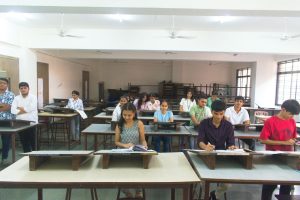
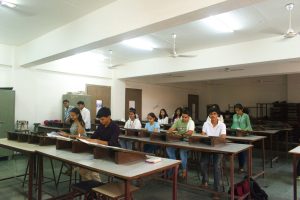
Lab 1 :Engineering Mechanics
Lab Incharge: Prof.Abhay Page
Lab Assistant:
Overview
Engineering Mechanics is one of the important subjects which deals with mechanics of various structures and components. The results determined at laboratories ensure safety, strength, rigidity, reliability and behaviors of mechanical beams, trusses, joints and other technological aspects. It is thus significant to acquire sound theoretical knowledge coupled with practical inputs observed at laboratories. As per the requirement of the revised syllabus, lab is spacious and well equipped with different apparatus such as force table, beam reaction, bell crank leaver friction, flywheel, compound pendulum etc.
Pictures
Lab 2 :AutoCAD
Lab Incharge: Prof.Videet Kamble
Lab Assistant: Mrs. Ashwini Hande
Overview
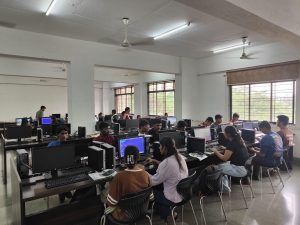
AutoCAD is the most widely used modeling package in today’s industrial development, for preparing drawings of all engineering components, designing mechanical engineering parts and modeling civil engineering structures. We explore students' basic knowledge of engineering drawing with the help of computer. We conduct practical to perform two dimensional views, isometric views, lettering, dimensioning & sectional views etc
Pictures
Lab 3 : Applied Chemistry
Lab Incharge: Dr.Sandhya Mathur
Lab Assistant: Mr.Avinash Khaire
Overview
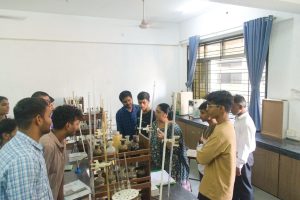
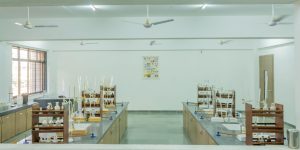
With an era of change, Engineering chemistry focuses on giving hands on expertise with leading edge technologies & Global perspective on the effect of that technology. Engineering chemistry department has been well established to make the students proficient in subject. The subject is common for all first year bachelor’s degree students. Engineering chemistry laboratory is well equipped with latest apparatus consisting of Redwood viscometer, Pensky Marten’s and Able’s Flash Point apparatus which can be used for testing lubricating oil to determine viscosity, flash point and fire point. Flue gas analysis of fuels can be carried out by using orsat apparatus to determine the % of CO2, O2, CO in the combustion product. PH of the unknown samples can be determined using PH -1 Meter.
Pictures
Lab 4 :Basic Electrical & Electronics Engineering
Lab Incharge: Prof.D.D.Gote
Lab Assistant:
Overview
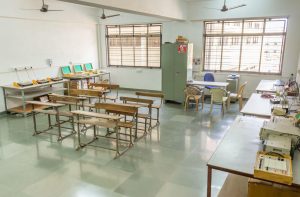
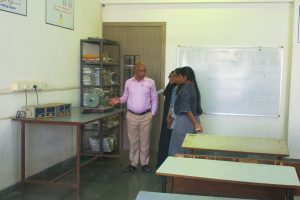
BEEE Lab is well equipped with Kits for all the experiments in the syllabus. The lab is equipped with required measuring instruments like Ammeters, Voltmeters, multi meters & Watt meters. The Lab is also equipped with all required components like resistors, inductors, capacitors transformers motors & load banks. We have well experienced technical staff. Students perform following experiments under the guidance of faculty.
1. Mesh and Nodal analysis.
2. Verification of Superposition Theorem.
3. Verification Thevenins Theorem.
4. Study of R-L series and R-C series circuit.
5. R-L-C series resonance circuit
6. R-L-C parallel resonance circuit.
7. Relationship between phase and line currents and voltages in 3″ phase System (star & delta)
8. Power and phase measurement in three phase system by two wattmeter method.
9. O.C. and S.C. test on single phase transformer
Pictures
Lab 5 :Digital System
Lab Incharge: Rof.Kalyani Fulzele
Lab Assistant:
Overview
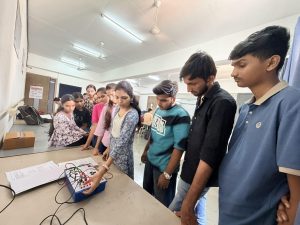
A digital system lab, often found within engineering, provides basic knowledge of digital system and equipped students with the foundational knowledge computer organization and architecture, fostering and understanding of how hardware and software components collaborate to execute tasks and preparing them to design and optimize computing system for real world applications. The key areas of focus in digital system lab are logic gates and combination circuits, digital components, memory system organization, I/O organization, Processor organization and control unit design.
Pictures
Lab 6 :Applied Physics
Lab Incharge: Prof.Dinesh Gangurde
Lab Assistant:Mr.Shayam Pawar
Overview
The Engineering Physics Laboratory is well equipped with latest apparatus of fiber optics, high quality cathode ray oscilloscope, function generator, LASER beam, ultrasonic generator models of crystal cells, Newton ring’s apparatus and cathode ray tube to measure e/m ratio.
Pictures
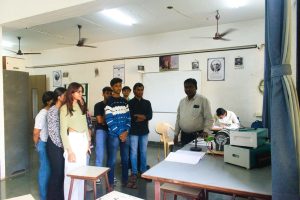
Lab 7 :C Programming
Lab Incharge: Prof.Jayashri Mahale
Prof.Smita Kurade
Lab Assistant:Mrs.Ashwini Hande
Overview
As per the requirement of today’s industrial development, we explore students' basic knowledge of Programming with the help of C language. C is a high-level structured oriented programming language. It is mainly developed as a system programming language for operating systems. We conduct practical projects on the construction of Algorithm and flowchart, Fundamentals of C-Programming like Functions, Arrays, String, Structure, Union, and Pointer etc. For implementation of above concepts with the help of Dev C++ IDE software on windows.
Pictures
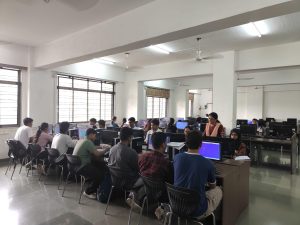
Lab 8 : Python Programming
Lab Incharge: Prof.Mohini Nerkar
Lab Assistant: Mrs.Ashwini Hande
Overview
In the last few years, python has been the choice of many computer students and programmers. Its importance as a language for learning and creating program is ever growing. Most of the software companies are expecting students to have knowledge in python. We conduct practical on fundamental of python programming, object-oriented programming concepts with libraries. For Implementation of above concepts, we use IDLE python software on windows or open-source operating system.
Pictures
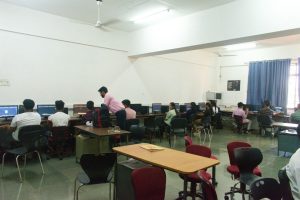
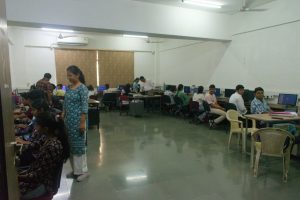
Lab 9 : Professional and Communication Ethics
Lab Incharge: Dr.Preeti Kaushal, Prof.Yashika Bhagat
Lab Assistant:
Overview
Language Lab is an equipped setting where language skills are polished. Language is always learned by the basic skills i.e. LSRW, for developing the speaking skills of students. They need to be exposed & given firsthand experience of listening to the ideal language user. Language lab. Provides this opportunity for the students.
Pictures
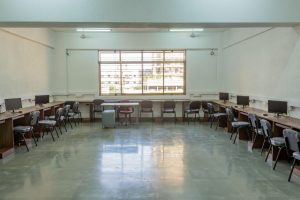
Lab 10 :Engineering Workshop(Mechanical)
Lab Incharge: Prof.Aditya Kakad
Lab Assistant:
Overview
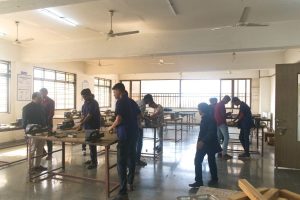
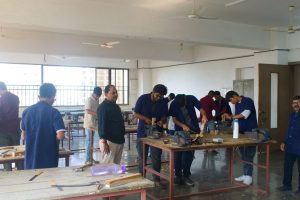
To familiarize with the basic manufacturing processes and to study the various tools and equipment used, hands-on training is given in different sections. Essentially students should know the labour involved, machinery or equipment necessary, time required to fabricate and also should be able to estimate the cost of the product or job work.
DETAILS OF RESOURCES & EQUIPMENTS:
The subject workshop technology has become increasingly important to the engineers engaged in the production of various types of machines and tools. The ability to work skillfully with hands, can be developed more readily and accurately, when the work to be performed in the shop floor it is necessary for students to understand both in practical and theoretical aspects. Spacious, fully ventilated workshop includes the Fitting section, Smithy section, Carpentry section, welding section, Machine shop, Sheet metal working and Electric wiring etc.
Fitting
The term fitting, is related to assembly of parts, after bringing the dimension or shape to the required size or form, in order to secure the necessary fit. The bench work and fitting plays an important role in engineering. Although in today’s industries most of the work is done by automatic machines which produces the jobs with good accuracy but still it (job) requires some hand operations called fitting operations.
Carpentry
Carpentry is the process of shaping Timber, using hand tools. The products produced are used in building construction, such as doors and windows, furniture manufacturing, patterns for moulding in foundries, etc. Carpentry work mainly involves the joining together of wooden pieces and finishing the surfaces after shaping them
Blacksmithy
Blacksmithy or Forging is an oldest shaping process used for producing small articles for which accuracy in size is not so important. The parts are shaped by heating them in an open fire or hearth by the blacksmith and shaping them through applying compressive forces using a hammer.
Welding
Welding is a process for joining two similar or dissimilar metals by fusion. It joins different metals/alloys, with or without the application of pressure and with or without the use of filler metal. The fusion of metal takes place by means of heat. The heat may be generated either from combustion of gases, electric arc, electric resistance or by chemical reaction.
The welding is widely used as a fabrication and repairing process in industries. Some of the typical applications of welding include the fabrication of ships, pressure vessels, automobile bodies, off-shore platforms, bridges, welded pipes, sealing of nuclear fuel and explosives, etc.
Sheet metal work
Sheet metal work has its own significance in the engineering work. Many products, which fulfill the household needs, decoration work and various engineering articles, are produced from sheet metals. Common examples of sheet metal work are hoopers, canisters, guards, covers, pipes, hoods, funnels, bends, boxes etc. Such articles are found less expensive, lighter in weight and in some cases sheet metal products replace the use of castings or forgings.
Pictures
Lab 11 :Engineering Workshop(Electrical)
Overview
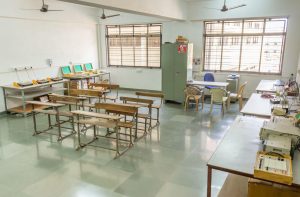
The Electrical Workshop Laboratory provides hands-on training to First Year Engineering students in basic electrical concepts. The lab introduces electrical tools, components, wiring techniques, and safety practices. Students gain practical exposure to electrical installations, measurements, and basic troubleshooting, helping them connect theory with real-world applications and build a strong foundation in electrical engineering.
Pictures
Lab 12 :Engineering Workshop(Computer)
Lab Incharge: Prof.Aanad Gadge
Lab Assistant: Mrs.Ashwini Hande
Overview
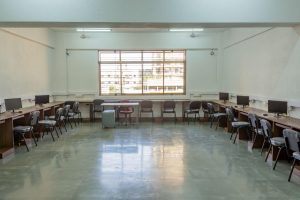
The Computer Workshop Laboratory provides hands-on experience in basic computer and programming skills for First Year Engineering students. It familiarizes students with computer hardware, software, operating systems, and essential programming tools. The lab helps students develop practical skills in coding, problem-solving, and digital applications, bridging the gap between theory and real-world computing.
Pictures
| Sr.No. | Date of Event | Name of Event | Link |
|---|---|---|---|
| 1 | 26/09/2025 | Fresher’s | Click Here |
| 2 | 16/09/2025 | Orientation Day | Click Here |
| 3 | 27/2/2025 | Expert Lecture on UHV | Click Here |
| 4 | 7th November, 2024 | Word Association | Click Here |
| 5 | 28th October, 2024 | Movie | Click Here |
| 6 | 23rd October, 2024 | Yoga Session | Click Here |
| 7 | 14th October, 2024 | Role Play | Click Here |
| 8 | 10th October, 2024 | Freshers | Click Here |
| 9 | 9th October, 2024 | Garba | Click Here |
| 10 | 4th October, 2024 | Orientation Day | Click Here |
| 11 | 30th September, 2024 | Creative Storytelling | Click Here |
| 12 | 22nd November, 2023 | Technical Session | Click Here |
| 13 | 8th November, 2023 | Yoga Session | Click Here |
| 14 | 15th September, 2023 | Engineers Day | Click Here |
| 15 | 29th August, 2023 | Orientation Day | Click Here |
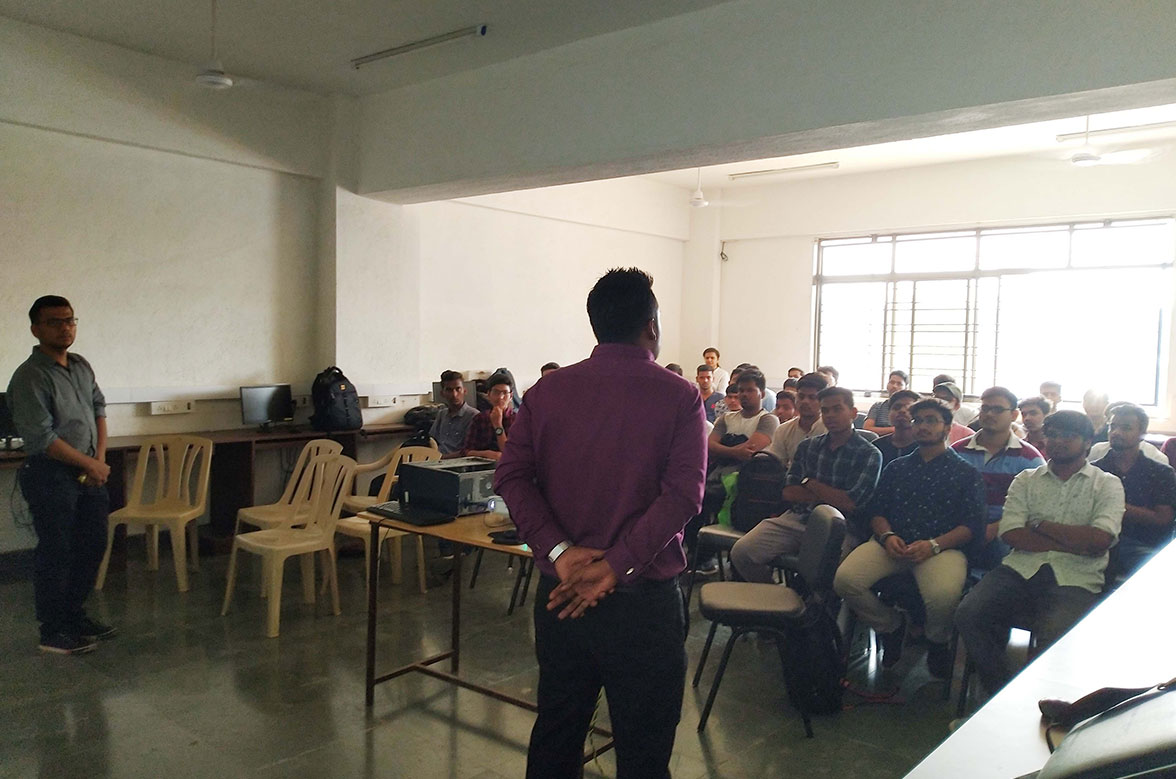
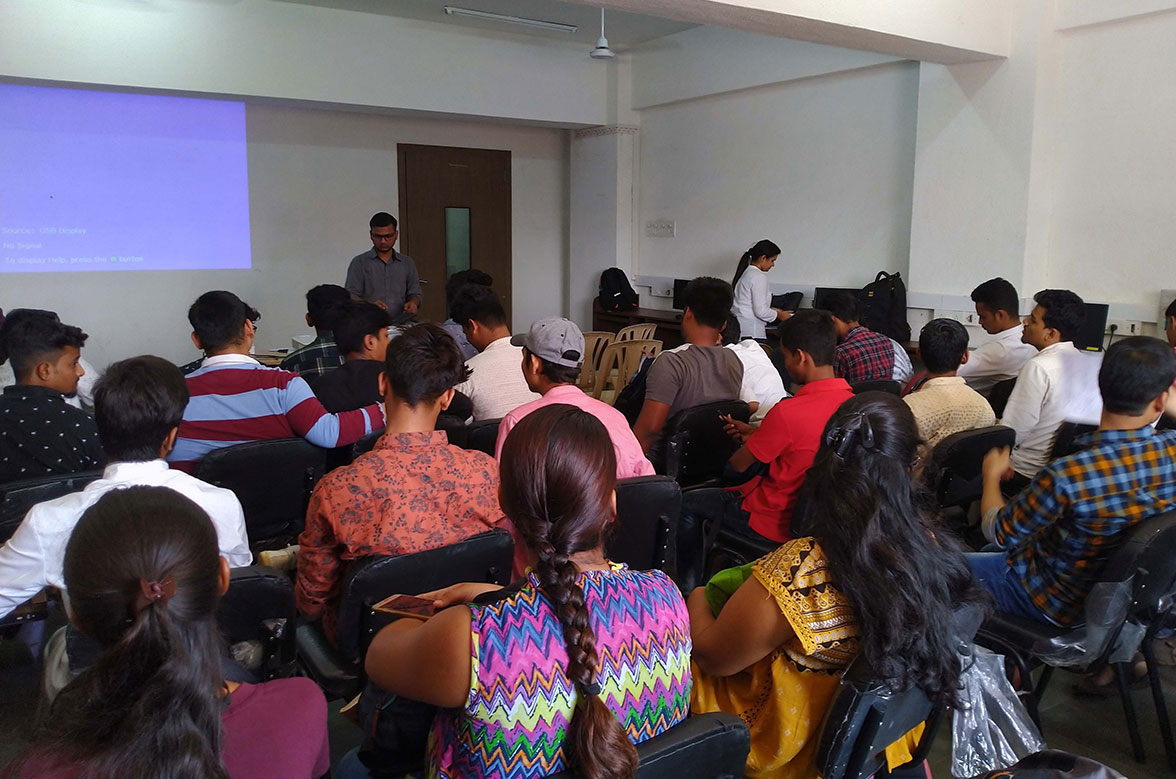
Seminar on 'Introduction to CATIA SOLIDWORKS & PROE for FE Mechanical Students
PLACE: Mumbai
Conducted Seminar on Introduction to CATIA SOLIDWORKS & PROE , in association with Institute of Engineers (India) on 29 March 2019, for FE mechanical engineering students
Activities
Academic Year 2025-26 {Reverse chronological order}
| Sr.No. | Subject | Date | Link |
|---|---|---|---|
| 1 | UNIT TEST II | 19/11/25 | First Year – Google Drive |
| 2 | Parents Teachers meeting | 30/10/25 | First Year – Google Drive |
| 3 | UNIT TEST I | 03/10/25 | NOTICE and TIME Table – Google Drive |
| 4 | Subject Choice | 12/09/25 | NOTICE and TIME Table – Google Drive |
| 5 | Parents Teachers meeting | 13/03/25 | Notice – Google Drive |
| 6 | UNIT TEST 1 | 13/02/25 | Notice – Google Drive |
| 7 | Notice regarding commencement of II Sem | 27/12/24 | Notice – Google Drive |
| 8 | UNIT TEST II | 12/11/24 | First Year – Google Drive |
Name of Company / Institution
- Overview of Collaboration
- Events
- MoU Link
Name of Company / Institution
- Overview of Collaboration
- Events
- MoU Link