Welcome to the Department of Artificial Intelligence and Data Science
At Smt.Indira Gandhi College of Engineering, Ghansoli, we are committed to shaping the future of technology by empowering our students with cutting-edge knowledge and skills in Artificial Intelligence (AI) and Data Science (DS). Our department is a hub of innovation, where creativity meets technical excellence. With a relevant curriculum, state-of-the-art facilities, and a team of dedicated faculty, we strive to prepare our students to tackle real-world challenges and lead in this transformative era of intelligent systems and data-driven decision-making.
Our focus is not just on academic excellence but also on fostering research, industry collaboration, and ethical practices to ensure our graduates contribute meaningfully to society. Whether you are a prospective student, a parent, or an industry partner, I invite you to explore our department and join us on this exciting journey of discovery and impact.
Together, let’s build a smarter tomorrow!
Scope (Career Opportunities)
Graduates of the Artificial Intelligence and Data Science program have diverse career opportunities across industries such as IT, healthcare, finance, manufacturing, and smart technologies. They can work as Data Scientists, AI or Machine Learning Engineers, Data Analysts, Big Data Engineers, and AI Researchers, contributing to the development of intelligent and data-driven solutions. The program also prepares students for roles in emerging areas like computer vision and natural language processing, as well as for higher studies, research careers, and entrepreneurship in AI and Data Science.
Vision of the College
To serve and have a transformative impact on society by constantly pursuing excellence in technical education, innovation and entrepreneurship for human development with strong ethical values.
Mission of the College
- Serve and help transform society by graduating talented, broadly educated engineers, equipped with state of art technology resources for developing sustainable solutions.
- Academic excellence in Science, Engineering and Technology through dedication to duty, commitment to research, innovation in learning and faith in human values.
- Cultivate the spirit of entrepreneurship and the connection between academia and industry that fosters problem solving through collaboration
- Enable the students to develop into outstanding professionals with high ethical standards capable of creating, developing and managing global engineering enterprises.
Vision of the Department:
To emerge as a center of excellence in the field of Artificial Intelligence and Data Science education, research , innovation, and societal,ethical solutions to national and global challenges.
Mission of the Department:
- To deliver high-quality education in AI and Data Science that nurtures academic excellence, human values, and a spirit of innovation.
- To promote interdisciplinary research and collaborative initiatives that contribute to technological advancements and societal development.
- Empower students to become exceptional professionals with strong ethical values, equipped to create, develop, and lead global engineering enterprises.
Program Outcomes (PO)
i) Engineering Knowledge: Apply the knowledge of mathematics, science, engineering fundamentals, and an engineering specialization to the solution of complex engineering problems.
ii)Problem Analysis: Identify, formulate, review research literature, and analyze complex engineering problems reaching substantiated conclusions using first principles of mathematics, natural sciences and engineering sciences.
iii) Design/Development of Solutions: Design solutions for complex engineering problems and design system components or processes that meet the specified needs with appropriate consideration for the public health and safety, and the cultural, societal, and environmental considerations.
iv) Conduct Investigations of Complex Problems: Use research-based knowledge and research methods including design of experiments, analysis and interpretation of data, and synthesis of the information to provide valid conclusions for complex problems: that cannot be solved by straightforward application of knowledge, theories and techniques applicable to the engineering discipline as against problems given at the end of chapters in a typical text book that can be solved using simple engineering theories and techniques; that may not have a unique solution. For example, a design problem can be solved in many ways and lead to multiple possible solutions; that require consideration of appropriate constraints / requirements not explicitly given in the problem statement such as cost, power requirement, durability, product life, etc.; which need to be defined (modeled) within appropriate mathematical framework; and that often require use of modern computational concepts and tools, for example, in the design of an antenna or a DSP filter.
v) Modern Tool Usage: Create, select, and apply appropriate techniques, resources, and modern engineering and IT tools including prediction and modeling to complex engineering activities with an understanding of the limitations.
vi) The Engineer and Society: Apply reasoning informed by the contextual knowledge to assess societal, health, safety, legal and cultural issues and the consequent responsibilities relevant to the professional engineering practice.
vii) Environment and Sustainability: Understand the impact of the professional engineering solutions in societal and environmental contexts, and demonstrate the knowledge of, and need for sustainable development.
viii) Ethics: Apply ethical principles and commit to professional ethics and responsibilities and norms of the engineering practice.
ix) Individual and Team Work: Function effectively as an individual, and as a member or leader in diverse teams, and in multidisciplinary settings.
x) Communication: Communicate effectively on complex engineering activities with the engineering community and with society at large, such as, being able to comprehend and write effective reports and design documentation, make effective presentations, and give and receive clear instructions.
xi) Project Management and Finance: Demonstrate knowledge and understanding of the engineering and management principles and apply these to one’s own work, as a member and leader in a team, to manage projects and in multidisciplinary environments.
xii) Life-long Learning: Recognize the need for, and have the preparation and ability to engage in independent and lifelong learning in the broadest context of technological change.
Program Specific Outcome (PSO)
- Apply the knowledge of Artificial Intelligence, Machine Learning, Deep Learning, and Data Science techniques to design intelligent systems and solve real-world problems.
- Use modern tools, programming languages, and frameworks to build intelligent systems and data-driven applications.
- Develop AI solutions that are socially responsible, ethically sound, and aligned with sustainable development goals.
Teaching Faculty
Master of Computer Science & Engineering,
Bachelor of Computer Science & Engineering
Non Teaching Staff
Diploma in Industrial Electronics
30 years experience in SIGCE
Designation: Lab Assistant
Qualification: BCA
Board of Studies Artificial Intelligence and Data Science
Board of Studies (BoS)
The Board of Studies is an academic body responsible for designing, reviewing, and updating the curriculum of AI & DS program to ensure academic quality, industry relevance, and compliance with university and regulatory norms.
Composition of Board of Studies
- Chairperson (Head of the Department)
- Internal Members (Faculty)
- External Academic Experts
- Industry Expert(s)
- Alumni Representative
- Student Representative (if applicable)
- University / Academic Council Nominee
Roles and Responsibilities
- Chairperson (Head of the Department)
-
- Convene and preside over BoS meetings
- Guide curriculum design and revisions
- Ensure compliance with UGC/AICTE/University norms
- Approve agenda and finalize recommendations
- Coordinate with the Academic Council
- Maintain academic standards
- Internal Members (Faculty)
-
- Design syllabus and course structure
- Define course objectives and outcomes
- Suggest teaching and evaluation methods
- Propose new electives and labs
- Review stakeholder feedback
- Update syllabus with recent developments
- External Academic Experts
-
- Review syllabus quality and depth
- Benchmark curriculum with reputed institutions
- Suggest advanced and emerging topics
- Validate assessment and outcomes
- Ensure academic rigor
- Industry Expert(s)
-
- Recommend industry-relevant skills and tools
- Suggest practical exposure and case studies
- Identify employability skill gaps
- Support internships and live projects
- Align curriculum with industry needs
- Alumni Representative
-
- Provide feedback from professional experience
- Suggest skill and employability improvements
- Share higher education and career insights
- Support curriculum relevance
- Student Representative
-
- Share learner feedback
- Highlight learning difficulties
- Suggest improvements in assessment
- Support learner-centric curriculum
- University / Academic Council Nominee
-
- Ensure statutory compliance
- Validate BoS recommendations
- Maintain academic governance
- Guide regulatory reforms
Key Functions of Board of Studies
- Curriculum design and revision
- Introduction of new courses
- Periodic syllabus updates
- Incorporation of stakeholder feedback
- Ensuring academic quality and relevance
LIST OF MEMBERS
| SN | Name of Person | Designation in the Committee | Attendance |
| 1 | Dr Shankar M. Patil | Chairperson | Present |
| 2 | Dr B Manoj Kumar Yadav | Faculty Member | Present |
| 3 | Dr Vaishali Shinde | Faculty Member | Present |
| 4 | Ms. Manisha Punse | Faculty Member | Present |
| 5 | Ms. Nirosha Uppu | Faculty Member | Present |
| 6 | Dr. G. T. Chavan | Subject Expert | Present |
| 7 | Dr. Shivaji D. Pawar | Subject Expert | Present |
| 8 | Dr. Sushopti D. Gawade | University Nominee | Present |
| 9 | Mr. Sailesh Patel | Industry Expert | Present |
| 10 | Dr Pinki Vishwakarma | Subject Expert | Present |
Purpose
The Departmental Advisory Board (DAB) provides strategic and academic guidance to ensure the AI & Data Science department remains industry-relevant, research-oriented, and aligned with emerging technologies and societal needs.
Roles and Responsibilities
- Academic & Curriculum Development
-
- Review and recommend updates to the AI & DS curriculum in line with emerging trends such as AI, ML, Deep Learning, Generative AI, Big Data, Cloud, and MLOps.
- Ensure alignment with Outcome-Based Education (OBE), accreditation standards, and industry expectations.
- Suggest new electives, laboratories, and value-added courses.
- Industry Interaction & Employability
-
- Advise on industry-oriented skill development and placement readiness.
- Facilitate internships, live projects, expert talks, and industry collaborations.
- Support MoUs with relevant industries and research organizations.
- Research, Innovation & Entrepreneurship
-
- Guide research directions and promote funded projects, publications, patents, and IPR.
- Encourage innovation, startups, incubation activities, and Centers of Excellence.
- Faculty Development
-
- Recommend faculty upskilling through FDPs, certifications, industry training, and collaborative research.
- Support mentoring and exposure to emerging AI & DS technologies.
- Student Development
-
- Advise on co-curricular and extra-curricular activities such as hackathons, coding competitions, data science challenges, and research participation.
- Promote student engagement in conferences, workshops, and innovation programs.
- Infrastructure & Resources
-
- Recommend improvements in laboratories, computing infrastructure, software tools, datasets, and cloud resources relevant to AI & DS.
- Quality Assurance & Continuous Improvement
-
- Review academic performance, student outcomes, and stakeholder feedback.
- Suggest corrective actions for continuous improvement of teaching–learning processes.
- Ethics & Social Responsibility
-
- Advise on ethical AI practices, data privacy, and responsible use of AI technologies for societal benefit.
| Sr. No. | Category | Name | Workplace | Qualification | Experience |
| 1 | Academic Expert | Dr. Kailash Devadkar | SPIT | Phd.(Computer Science) | 29 |
| 2 | Academic Expert | Dr. Sushopti D. Gawade | Vidyalankar Institute of Technology,wadala | Phd.(Computer Science) | 27 |
| 3 | CSI Member | Dr. Tushar Ghorpade | RAIT,Nerul | Phd.(Computer Science) | 19 |
| 4 | Industry Expert | Mr. Pamod Nimbhore | DevOps Engg.DDN,Pune | B.E.(Computer Technology) | 8 |
| 5 | Industry Expert | Mr. Shashank rameshwar | Sales Director | BE computer | 14 |
| 6 | Parent | Mr. Anil P. Nawale | Ambernath Highschool, Chembur | Bsc.B.ed | 22 |
| 7 | Parent | Mr. Sameer Randive | Sundaram Mutual Funds | BE Production,MBA Marketing | 23 |
| 8 | Student | Miss Yeole Bhumika | T.E. | ||
| 9 | Student | Mr Siddhhesh Gangurde | T.E. |
List of Members
- Dr. Vaishali shinde
- Prof. Nirosha Uppu
- Dr. Manoj Yadav
Purpose
The Programme Assessment & Quality Improvement Committee (PAQIC) is responsible for monitoring, assessing, and continuously improving the quality of the AI & Data Science programme in alignment with Outcome-Based Education (OBE), accreditation requirements, and stakeholder expectations.
Roles and Responsibilities
- Outcome-Based Education (OBE) Implementation
-
- Define, review, and update Programme Outcomes (POs), Programme Specific
- Outcomes (PSOs), and Course Outcomes (COs) for the AI & DS programme.
- Ensure proper mapping of CO–PO–PSO and alignment with curriculum objectives.
- Monitor attainment levels and recommend improvements.
- Academic Assessment & Evaluation
-
- Review internal and external assessment processes to ensure fairness, transparency,
- and effectiveness.
- Analyze student performance data and identify learning gaps.
- Recommend corrective actions such as remedial classes, bridge courses, and
- curriculum enrichment.
- Continuous Quality Improvement (CQI)
-
- Analyze CO, PO, and PSO attainment results each academic year.
- Identify strengths, weaknesses, and improvement areas in teaching–learning
- processes.
- Document and track Continuous Quality Improvement (CQI) actions.
- Curriculum Effectiveness Review
-
- Evaluate the effectiveness of AI & DS curriculum in meeting industry, research, and
- societal needs.
- Recommend curriculum updates based on:
- Emerging AI & Data Science technologies
- Industry feedback
- Alumni and employer inputs
- Stakeholder Feedback Analysis
-
- Collect and analyze feedback from:
- Students
- Faculty
- Alumni
- Employers
- Collect and analyze feedback from:
Other Committees
| AIDS – AY: 2025-26 , ODD SEM | |||
| Sr. No. | Sem | Subject | Subject Code |
| 1 | III | EM-III (TH) | PC301 |
| 2 | DSGT | PC302 | |
| 3 | AOA | PC303 | |
| 4 | COA | PC304 | |
| 5 | ELECTIVE | OE301 | |
| 6 | AOA lab | PCL301 | |
| 7 | COA Lab | PCL 302 | |
| 8 | Full stack Java Pgming Lab | VSE 301 | |
| 9 | Entrepreneurship Developement | HSL 301 | |
| 10 | Environmental Science for Engineeres | VECL301 | |
| 11 | V | Computer Network | CSC501 |
| 12 | V | Web Computing | CSC502 |
| 13 | Artificial Intelligence | CSC503 | |
| 14 | Data Warehousing & Mining | CSC504 | |
| 15 | Statistics for Artificial Intelligence & Data Science | CSDLO5011 | |
| 16 | Web Computing & Network Lab | CSL 501 | |
| 17 | Artificial Intelligence Lab | CSL 502 | |
| 18 | Data Warehousing & Mining Lab | CSL 503 | |
| 19 | Business Communication | CSL 504 | |
| 20 | Mini Project: 2 A | CSM501 | |
| 1 | IV | Computational Theory |
| 2 | Database Management System | |
| 3 | Operating System | |
| 4 | Multidisciplinary minor – Fundamentals of Telecommunication | |
| 5 | Open Elective – Fintech for Business Management | |
| 6 | Database Management System Lab | |
| 7 | Operating System Lab | |
| 8 | Multidisciplinary minor Lab – Fundamentals of Telecommunication | |
| 9 | Mini Project-I | |
| 10 | Business Model Development | |
| 11 | Design Thinking | |
| 12 | VI | Data Analytics and Visualization |
| 13 | Cryptographyand System Security | |
| 14 | Software Engineering and Project Management | |
| 15 | Machine Learning | |
| 16 | Image and Video Processing | |
| 17 | Data Analytics and Visualization Lab | |
| 18 | Cryptographic and system security Lab | |
| 19 | Software Engineering andProject Management Lab | |
| 20 | Machine Learning Lab | |
| 21 | Skill Based Lab course : Cloud Computing | |
| 22 | Mini Project 2B |
Name of laboratory: Data Science & Engineering
Location: Lab Number 601A
Area of Laboratory: 15*26 ft
Laboratory Incharge: Dr.ManojKumar Yadav
Laboratory Equipment: Desktop, Mouse,K/B,CPU, Epson projector,Routre , Hp Laser jet Pro P1108
Hardware: :Processor- 12th Gen Intel(R) Core(TM) i5-12400 2.50 GHz,RAM-16 GB
Software/ Operating System: R language,MS-SQL, Linux,Ubuntu,Turbo , Windows 11 Pro Utilization of Laboratory: SE,,TE ,Departmental Value Added Programs
Laboratory Photo:
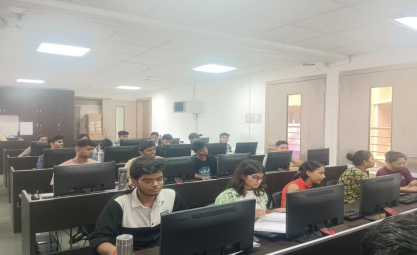
Name of laboratory: Computer Network & Cybersecurity
Location: Lab Number 601B
Area of Laboratory: 14*26 ft
Laboratory Incharge: Prof.Nirosha Uppu
Laboratory Equipment: Desktop, Mouse,K/B,CPU,Projector, Hp Laser jet Pro P1108
Hardware: Processor- 12th Gen Intel(R) Core(TM) i5-12400 2.50 GHz,RAM-16 GB Software/ Operating System: Linux, Ubuntu, Turbo C
Utilization of Laboratory: SE,TE
Laboratory Photo
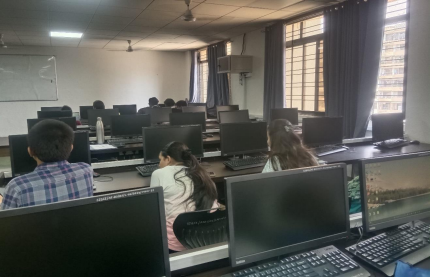
Name of laboratory: Computer Network & Cybersecurity
Location: Lab Number 601B
Area of Laboratory: 14*26 ft
Laboratory Incharge: Prof.Nirosha Uppu
Laboratory Equipment: Desktop, Mouse,K/B,CPU,Projector, Hp Laser jet Pro P1108
Hardware: Processor- 12th Gen Intel(R) Core(TM) i5-12400 2.50 GHz,RAM-16 GB Software/ Operating System: Linux, Ubuntu, Turbo C
Utilization of Laboratory: SE,TE
Laboratory Photo
Academic Year 2025-26 {Reverse chronological order}
| sr | Subject | Date | Link |
| 1 | Exam Notice | AY: 2025-26 | Notice link |
| 2 | Department Notice | AY: 2025-26 | Department link |
| 3 | PAQIC Notice | AY: 2025-26 | PAQIC link |
Name of Company / Institution
- Overview of Collaboration
- Events
- MoU Link
NO Mou
Name of Company / Institution
- Overview of Collaboration
- Events
- MoU Link
Department Clubs
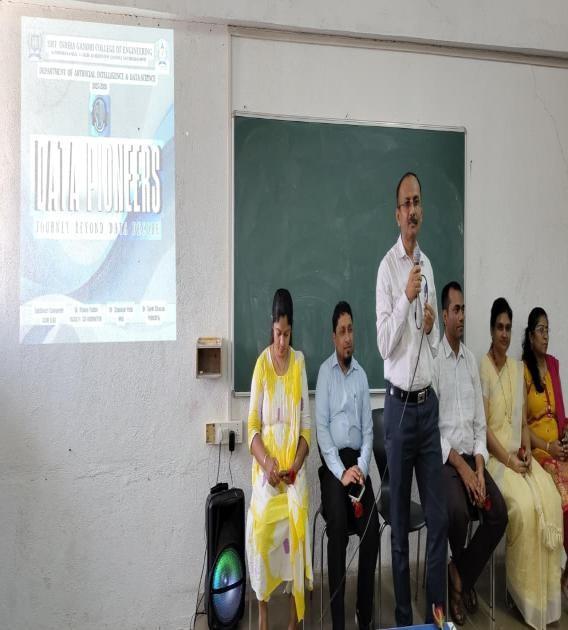
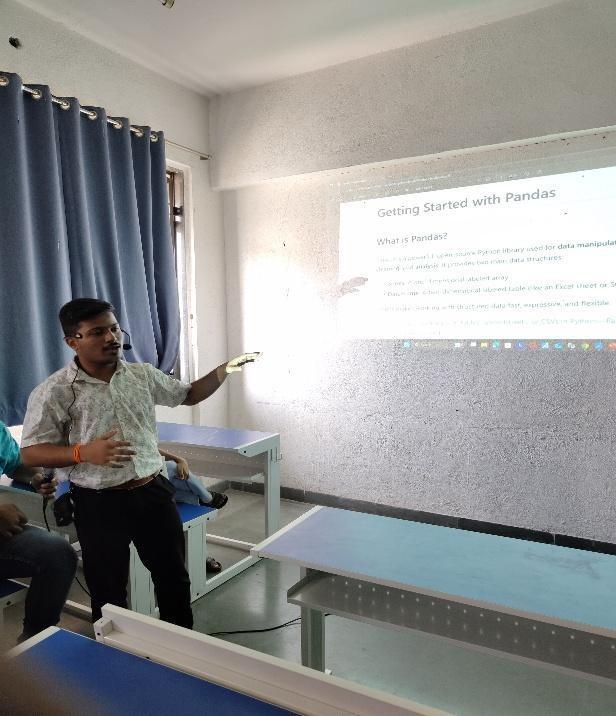
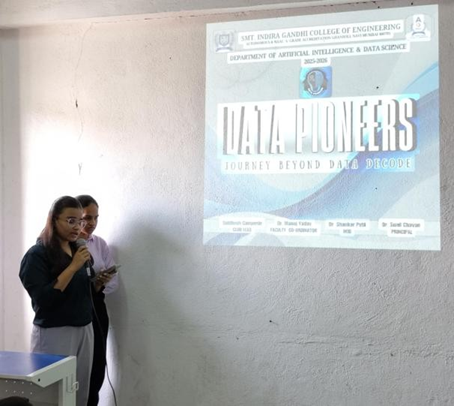
DATA PIONEERS CLUB Activity Report:
- Dr. Manoj Yadav
Student Coordinator List
- Mr. Siddhesh
- Ms. Sayali
- Mr. Sohan
- Ms. Bhumika
- Mr. Suraj