Our engineering curriculum is designed in alignment with Outcome-Based Education (OBE) principles as advocated by the NBA and NAAC frameworks. It emphasizes a strong foundation in core disciplines (CSE, Electrical, Mechanical) integrated with interdisciplinary learning, hands-on practice, and industry engagement.
The curriculum is structured to achieve clearly defined Programme Outcomes (POs), Programme Specific Outcomes (PSOs), and Course Outcomes (COs), focusing on problem-solving, design thinking, and application of engineering principles to real-world challenges. It incorporates laboratory work, project-based learning, internships, and emerging technologies such as AI, IoT, renewable energy, and advanced manufacturing.
Continuous evaluation, stakeholder feedback, and periodic curriculum revision ensure relevance to industry needs and global standards. The program also fosters ethical responsibility, sustainability awareness, teamwork, communication skills, and lifelong learning—preparing graduates for professional excellence, higher studies, and societal contribution.
The engineering curriculum is aligned with the principles of National Education Policy 2020, emphasizing flexibility, multidisciplinary learning, and holistic development. It adopts a student-centric approach with multiple entry and exit options, credit-based structure, and opportunities for interdisciplinary electives across domains.
The curriculum integrates skill development, internships, project-based learning, and industry collaboration to enhance employability and practical competence. Emerging areas such as Artificial Intelligence, Data Science, renewable energy, and smart manufacturing are embedded to meet evolving technological demands.
In line with NEP 2020, the program promotes critical thinking, innovation, entrepreneurship, and ethical values. Continuous assessment, academic bank of credits (ABC), and outcome-based education practices ensure transparency, mobility, and lifelong learning pathways, preparing graduates to contribute effectively to society and the global knowledge economy.
2.2 Curriculum and Syllabus
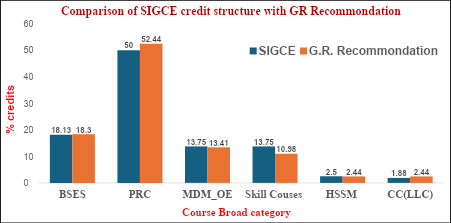
Curriculum as per Government Resolution (Credit Structure)
The curriculum is designed in accordance with the credit framework prescribed by the Government Resolution and regulatory guidelines issued by statutory bodies such as AICTE. It follows a Choice Based Credit System (CBCS) with clearly defined credits for theory, laboratory, tutorial, project work, and internship components.
Each course is assigned credits based on contact hours and learning outcomes, ensuring a balanced academic workload and progressive knowledge acquisition. The program structure typically includes foundational courses, core engineering subjects, discipline-specific electives, open electives, skill-based courses, and a capstone project.
The credit system facilitates academic flexibility, enabling students to choose electives, pursue interdisciplinary learning, and accumulate credits as per prescribed norms. Continuous assessment and semester-end evaluation ensure transparency and alignment with Outcome-Based Education practices, preparing students to meet professional and industry standards.